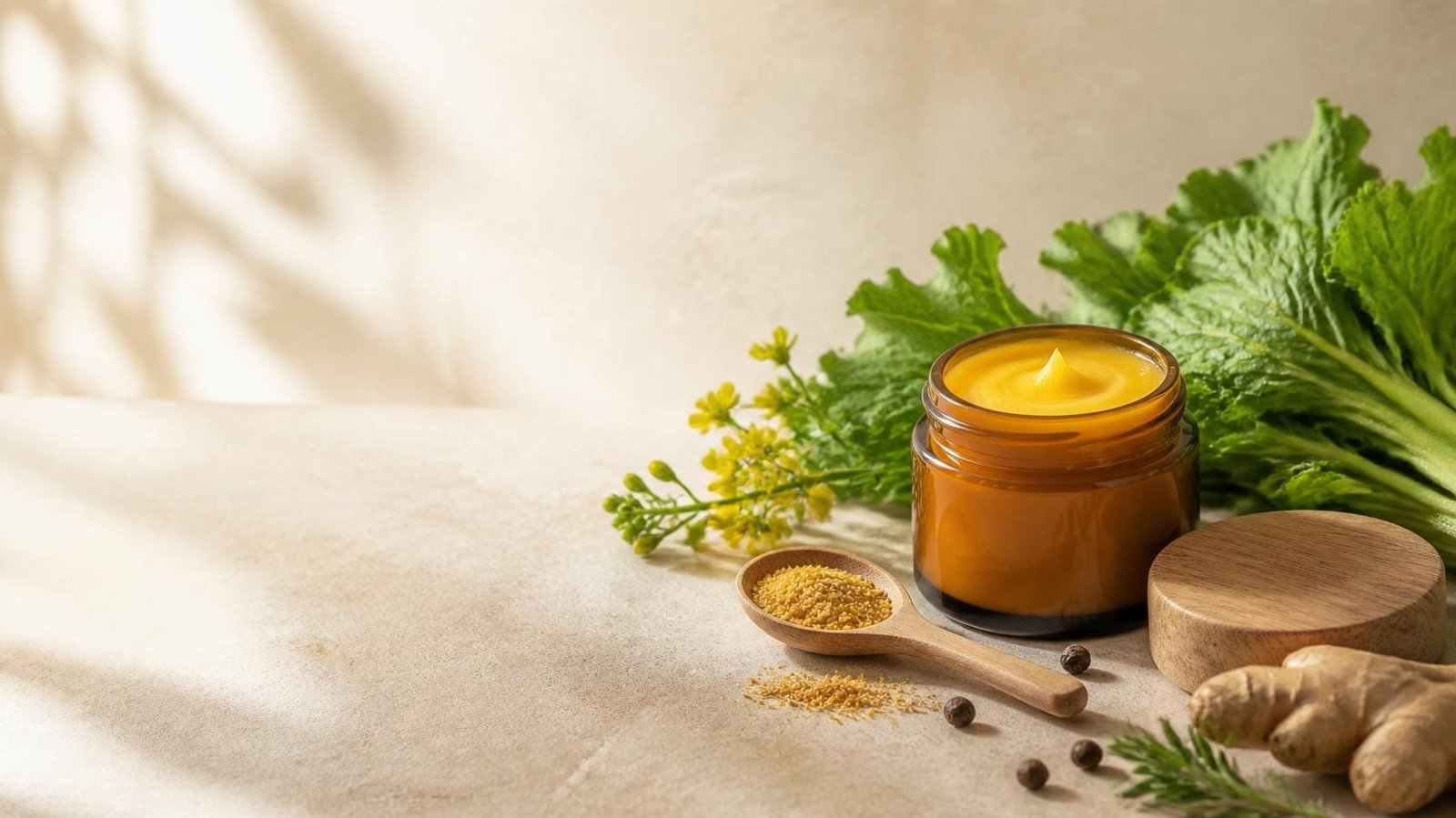
Mustard Chest Rub
An Old-Time Warming Remedy and Safer Alternatives
There was a time when a mustard chest rub was a familiar part of many household remedy traditions. When winter brought coughs, sniffles and chest discomfort, some families turned to simple kitchen ingredients, including mustard powder, believing its warming sensation might bring comfort.
But is this old-fashioned remedy worth trying today?
A mustard chest rub, also known as a mustard plaster or mustard poultice, has a long history in traditional home care. Although the idea of a warming preparation may sound appealing, mustard can irritate the skin and cause serious burns. Its traditional use is not proof that it treats a cough, cold or chest congestion.
Here at Mums Old Ways, we believe traditional wisdom is worth exploring, provided we also understand its limitations. Let’s look at what a mustard chest rub is, why people used it, the risks to know about, and some gentler ways to find comfort when you’re feeling under the weather.

What Is a Mustard Chest Rub?
A mustard chest rub is a traditional external preparation associated with mustard seed powder. Historically, mustard plasters were made by combining powdered mustard with other ingredients, often flour and water, and placing the mixture inside a piece of cloth.
The cloth was then applied to the chest or another area of the body.
Mustard produces a strong warming and irritating sensation when it comes into contact with skin. This sensation explains much of its appeal in traditional remedies. However, feeling warmth on the surface of the skin does not mean the preparation is clearing the lungs, treating an infection or relieving the underlying cause of a cough.
Medical literature has documented cases of second-degree burns following the use of mustard plasters and other mustard-containing skin preparations. For this reason, a homemade mustard paste should not be recommended as a chest treatment. Source: Dermatology Online Journal.
Why Was Mustard Used in Traditional Home Remedies?
Mustard has been used in cooking for centuries, but its role in traditional household remedies extended beyond the kitchen.
In earlier generations, people often relied on readily available ingredients when professional medical care was difficult to access. Mustard seed powder, flour, herbs and warm cloths were common household materials, making preparations such as mustard plasters familiar to many families.
The warming sensation was thought to help with complaints such as chest discomfort, aching muscles and congestion.
It is important to distinguish between traditional practice and proven effectiveness, though. A remedy can have a long history without being medically effective or safe.
Mustard’s strong skin-irritating properties are well recognised, and there is no good evidence that applying a mustard plaster treats respiratory infections or clears chest congestion.
The useful lesson from the old ways is not that every traditional preparation should be recreated. It is that simple household approaches can be examined thoughtfully, keeping what is sensible and leaving behind practices that carry unnecessary risks.
What Ingredients Were Traditionally Used?
Traditional mustard plasters varied between households. Some commonly described preparations contained the following ingredients.
Mustard powder
Ground mustard seed provides the characteristic pungent sensation. When mustard powder is mixed with water, compounds responsible for its sharp flavour can produce skin-irritating substances.
This is precisely why mustard powder should not be treated as a harmless natural skin ingredient.
Plain flour
Flour was sometimes added to mustard powder to dilute the mixture. However, mixing mustard with flour does not guarantee that a preparation will be safe for the skin.
Water
Water was traditionally used to combine the dry ingredients into a paste. Moisture can help activate compounds in mustard that contribute to its irritating effects.
Important: Although these ingredients appear in historical recipes, Mums Old Ways does not recommend mixing them into a chest paste or applying a mustard plaster to the skin. A protective cloth does not eliminate the risk of burns.
A Safer Way to Enjoy Old-Fashioned Warming Comfort
If the appeal of a mustard chest rub is the warmth and comfort associated with traditional winter care, there are gentler alternatives that do not require putting irritating mustard paste on your skin.
1. Try a comfortably warm compress
A plain, warm compress can be a simple way to relax while resting.
What you’ll need:
- A clean, soft face washer or small towel
- Warm water, not hot
- A dry towel
How to prepare it:
- Wet the face washer with comfortably warm water.
- Wring out the excess water.
- Check the temperature against your own inner wrist.
- Rest it gently over clothing or on an area where the warmth feels pleasant.
- Remove it if it becomes uncomfortable, and never use it while sleeping.
Avoid placing hot compresses on the chest, particularly if your skin is sensitive or you have reduced sensation.
A warm compress is a comfort measure, not a treatment for the cause of a cough or chest infection.
2. Make a simple honey and lemon drink
A warm drink is another traditional way to make a chilly day feel more comfortable.
Ingredients:
- 250 ml warm water
- 1–2 teaspoons honey
- A squeeze of fresh lemon juice
Method:
- Pour the warm water into a mug.
- Stir in the honey until dissolved.
- Add lemon juice to taste.
- Allow the drink to cool to a comfortable sipping temperature.
Honey and lemon create a pleasant combination of sweetness and citrus flavour. Warm fluids can also help maintain hydration when you’re unwell.
Honey may provide some relief from acute cough symptoms in certain circumstances, although it is not a cure for the underlying illness. Never give honey to a child under 12 months of age.
3. Enjoy a warm shower and a quiet rest
Sometimes the simplest approach is the most practical.
A comfortably warm shower, a glass of water and a little time to rest can make an uncomfortable day easier to manage. Avoid bowls of boiling water for steam inhalation, as they can cause serious scalds.
If you have a cough, drinking fluids and getting adequate rest are sensible supportive measures. Seek medical advice if symptoms are severe, worsening or persistent.
How to Make a Traditional Winter Wellness Routine
You don’t need a complicated collection of remedies to create a comforting routine at home.
A few simple habits can make a cold day more manageable.
Start with hydration. Keep water nearby and enjoy warm drinks if they feel soothing.
Choose nourishing food. Soup, porridge, fruit and other familiar foods can help you maintain a balanced diet while your appetite or energy is low.
Make time for rest. Give yourself permission to slow down when you’re feeling unwell.
Keep your environment comfortable. Avoid smoke and other irritants that may aggravate coughing or breathing discomfort.
Know when to seek help. Home comfort measures should never delay assessment when symptoms suggest a more serious illness.
These practical habits fit the Mums Old Ways philosophy: familiar ingredients, simple routines and sensible choices that support everyday wellbeing without promising miracle results.
A Quick Safety Note
Mustard chest rubs and mustard plasters are best avoided because they can cause skin irritation, blistering and burns. Do not apply homemade mustard paste directly to the skin, cover it tightly, combine it with external heat or leave it in place overnight.
Extra caution is particularly important for babies, children, older adults and anyone with sensitive skin, reduced sensation or circulation problems.
If you have already applied a mustard preparation and experience burning, remove it and rinse the affected skin under cool running water. Seek medical advice for blistering, persistent pain or significant skin damage.
If you’re experiencing breathing difficulty, significant chest pain or severe symptoms, seek urgent medical care. In Australia, call 000 for a medical emergency.
For non-emergency advice, a GP or pharmacist can help you choose appropriate options for your symptoms.
Frequently Asked Questions
1. What is a mustard chest rub?
A mustard chest rub is a traditional remedy associated with mustard seed powder, usually prepared as a paste or poultice and applied externally. It was historically used for complaints such as coughs and congestion, but its effectiveness is unproven and skin injury is a recognised risk.
2. Does a mustard chest rub help with a cough?
There is no good evidence that mustard plasters treat a cough, clear the lungs or cure a respiratory infection. A warm drink, rest and adequate hydration are more sensible comfort measures.
3. Can mustard powder burn your skin?
Yes. Mustard powder can cause significant irritation, blistering and chemical-like burns. Severe injuries have been documented in medical case reports, so homemade mustard pastes should not be applied to the skin.
4. Can I use a mustard chest rub on a child?
No. Mustard plasters should not be used on babies or children because their skin is vulnerable to injury. For a child’s cough, seek advice from a GP or pharmacist about age-appropriate care.
5. What is a safer alternative to a mustard chest rub?
A comfortably warm compress, a warm drink, adequate fluids and rest are gentler options for everyday comfort. A honey and lemon drink may soothe a cough for some people, but honey must never be given to children under 12 months.
6. When should I seek medical advice for a cough?
Seek medical advice if a cough is persistent, worsening or accompanied by fever, wheezing or chest discomfort. Breathing difficulty, severe chest pain or other emergency symptoms require urgent assessment.
7. Can I store a homemade mustard chest rub for later?
We don’t recommend making or storing a mustard chest rub for skin application. Instead, prepare a fresh honey and lemon drink when you want one. If you make a larger batch, refrigerate it promptly in a clean, covered container and use it within a reasonable period.
Final Thoughts
The mustard chest rub is an interesting reminder of how previous generations used familiar kitchen ingredients in their household remedy traditions.
But natural does not automatically mean safe, and a warming sensation is not proof of a health benefit. Mustard plasters can cause painful skin injuries, making them a poor choice for modern home care.
At Mums Old Ways, we believe the best traditions are those we can carry forward responsibly. A warm drink, a comfortable compress, nourishing food and a little rest are simpler ways to bring some comfort to a winter day.
If you enjoy traditional ideas made practical for modern living, explore more simple wellness recipes and natural living tips here at Mums Old Ways.