
Chicken Soup
The Comfort Food Remedy for Cold Days
There is something wonderfully reassuring about a steaming bowl of chicken soup on a cold day. The aroma fills the kitchen, the broth warms you from the inside, and every spoonful feels like the sort of simple comfort that has been enjoyed in family kitchens for generations.
Chicken soup for cold days is more than just an old-fashioned tradition. It can provide fluids, protein, vegetables and energy in an easy-to-eat meal, while the warmth of the soup can feel particularly soothing when you’re feeling under the weather.
Research into soup and respiratory infections is still limited, but a recent systematic review found preliminary evidence that soup may modestly improve some symptoms, while researchers emphasised that more high-quality studies are needed.
So, no, chicken soup isn’t a cure for a cold. But it can certainly be a nourishing, comforting addition to your routine.
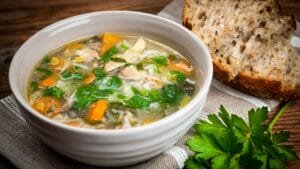
What Makes Chicken Soup So Comforting?
Chicken soup has earned its reputation as a classic cold-weather food for good reason.
It combines several things that are particularly appealing when you’re tired or not feeling your best: warmth, liquid, gentle flavours and nourishing ingredients.
A bowl can contain:
- Chicken for protein
- Carrots and other vegetables
- Onion and garlic for flavour
- Herbs for aroma
- Broth for a warm, savoury base
- Noodles, rice or potatoes for extra energy
The result is a complete and satisfying meal without requiring anything complicated.
There is also something to be said for the experience itself. A pot of soup simmering on the stove makes the kitchen smell inviting, and sitting down with a warm bowl can turn an ordinary winter evening into something much more comforting.
Can Chicken Soup Actually Help With a Cold?
This is where it’s useful to separate traditional wisdom from medical claims.
Chicken soup should not be described as a treatment or cure for the common cold. However, there is some interesting research behind its long-standing reputation.
One small study found that hot chicken soup temporarily increased the movement of nasal mucus compared with cold water, suggesting that warm soup may have short-term effects on nasal secretions.
More recently, a systematic review examining soup and acute respiratory infections found preliminary evidence of modest improvements in symptom severity and illness duration, although the researchers noted that only four studies met their criteria and that better research is still needed.
That makes chicken soup an interesting example of traditional food wisdom that deserves a little more scientific investigation.
It is still food first — and that’s perfectly fine.
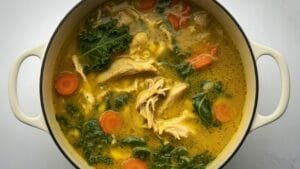
A Simple Traditional Chicken Soup Recipe
This is the sort of recipe that doesn’t need fancy ingredients or complicated techniques.
It is flexible, inexpensive and easy to adapt according to what you have in the kitchen.
Ingredients
Serves approximately 4–6.
- 500–700 g chicken thighs or chicken breast
- 1.5 litres chicken stock or broth
- 2 carrots, sliced
- 2 celery stalks, sliced
- 1 brown onion, diced
- 2 garlic cloves, finely chopped
- 1–2 potatoes, diced
- 1 bay leaf
- 1 teaspoon dried thyme
- 1 tablespoon chopped fresh parsley
- Salt and freshly ground black pepper, to taste
- 1 tablespoon olive oil
- 100 g noodles or small pasta, optional
- 500 ml water, if needed
You can also add other vegetables such as leek, zucchini, peas or spinach.
How To Make Chicken Soup
1. Prepare the vegetables.
Dice the onion, slice the carrots and celery, and cut the potatoes into small, even pieces.
2. Soften the onion.
Heat the olive oil in a large saucepan over medium heat. Add the onion and cook for a few minutes until softened.
Add the garlic and stir for another 30 seconds.
3. Add the chicken and vegetables.
Place the chicken into the pot along with the carrots, celery and potatoes.
Pour in the chicken stock and water.
4. Add the herbs.
Add the bay leaf and thyme, then season lightly with black pepper.
Be careful with salt if your stock is already salty.
5. Simmer gently.
Bring the soup to a gentle simmer and cook until the chicken is thoroughly cooked and the vegetables are tender.
For food safety, chicken should reach an internal temperature of at least 75°C.
6. Shred the chicken.
Remove the cooked chicken from the pot and allow it to cool enough to handle. Remove any bones and shred or chop the meat.
Return the chicken to the saucepan.
7. Add noodles if desired.
If you’re using noodles or small pasta, add them toward the end of cooking according to the packet instructions.
8. Finish with parsley.
Remove the bay leaf and stir through the fresh parsley.
Taste and adjust the seasoning.
Serve warm.
Why Homemade Chicken Soup Is Worth Making
One of the nicest things about homemade soup is that you control what goes into the pot.
You can use plenty of vegetables, choose the type of chicken you prefer and adjust the seasoning to suit your family.
It also makes it easier to create a meal that is gentle and familiar.
If someone in the household isn’t feeling hungry, a small bowl of warm soup can be more appealing than a large heavy meal.
The broth also contributes fluid to the meal, although there’s no need to force yourself to drink excessive amounts simply because you have a cold. Evidence does not show that people with common colds necessarily become dehydrated.
Simple Variations
The beauty of chicken soup is that you don’t really need a strict recipe.
Chicken and Ginger Soup
Add a few thin slices of fresh ginger while the soup simmers.
Ginger brings a gentle warmth and distinctive flavour that works beautifully with chicken broth.
Chicken, Lemon and Parsley Soup
Add a small squeeze of fresh lemon juice just before serving.
The brightness of lemon cuts through the richness of the broth and gives the soup a fresh flavour.
Chicken and Rice Soup
Replace noodles with cooked rice.
This creates a particularly simple and satisfying bowl of soup.
Extra Vegetable Chicken Soup
Add zucchini, peas, spinach, pumpkin or sweet potato.
It’s an easy way to make the soup more substantial while increasing the variety of vegetables.
How To Make Chicken Soup Even More Nourishing
You don’t need to turn chicken soup into a complicated health food.
Instead, think about balance.
Include a good source of protein, several vegetables and enough liquid to create a satisfying broth.
You can also experiment with herbs and spices rather than relying heavily on salt.
Parsley, thyme, rosemary, black pepper, garlic and ginger can all add plenty of flavour.
If you’re making soup for someone with a poor appetite, softer vegetables and shredded chicken can make it easier to eat.
And remember that soup can be a meal in itself.
Serve it with wholegrain toast, crusty bread or a simple sandwich if you want something more substantial.
Chicken Soup on a Cold Winter Day
Chicken soup isn’t only useful when someone has a cold.
It is simply good cold-weather food.
A pot can be prepared in advance, portions can be stored for another meal, and the recipe can change depending on what vegetables are available.
That’s very much in keeping with the old ways.
Use what you have.
Make a big pot.
Feed the family.
Save what’s left.
Nothing needs to be perfect.
In many homes, recipes like this weren’t written down at all. Someone simply knew roughly how much chicken, onion, carrot and seasoning belonged in the pot.
That’s part of what makes traditional home cooking so appealing.
Storing Homemade Chicken Soup Safely
Chicken soup contains cooked meat and vegetables, so proper storage matters.
Don’t leave a large pot sitting at room temperature for hours.
Food Standards Australia New Zealand advises that perishable food should not remain in the temperature danger zone unnecessarily. Food held between 5°C and 60°C for less than two hours can generally be refrigerated, while food held there for more than four hours should be discarded.
For a large batch of soup, divide it into smaller, shallow containers so it cools more quickly before refrigeration.
When reheating, heat the soup thoroughly and serve it piping hot.
If you’re unsure whether leftover soup has been stored safely, it’s better to throw it away.
A Quick Safety Note
Chicken soup is generally a straightforward family meal, but remember that individual dietary needs vary.
Take particular care with:
- Chicken allergies or other food allergies
- High-sodium commercial stocks
- Food intolerances
- Pregnancy-related food safety requirements
- Young children
- Anyone with a medical condition requiring a specific diet
Chicken should always be cooked thoroughly, and raw chicken should not be washed before cooking because splashing can spread harmful microorganisms around the kitchen.
If you’re unwell with symptoms that are severe, unusual or getting worse, seek appropriate medical advice rather than relying on food or traditional remedies alone.
Frequently Asked Questions
Is chicken soup good for a cold?
Chicken soup can be a comforting and nourishing meal when you have a cold. Research into soup and respiratory infections suggests there may be modest symptom benefits, but evidence remains limited and chicken soup should not be considered a cure.
Why do people traditionally eat chicken soup when sick?
Chicken soup is warm, hydrating as a food, easy to eat and can provide protein and vegetables. It has also been a popular home comfort food for generations.
Can I add ginger to chicken soup?
Absolutely. Fresh ginger adds a warm, slightly spicy flavour and pairs particularly well with chicken and broth.
Can chicken soup be frozen?
Yes. Homemade chicken soup can be frozen in suitable airtight containers. Leave room for expansion and thaw it safely before reheating.
How long does homemade chicken soup last?
For best quality and food safety, refrigerate leftovers promptly and use them within a few days. Follow safe cooling and storage practices rather than leaving soup at room temperature.
Can I make chicken soup without noodles?
Yes. Noodles are completely optional. Rice, potatoes, barley or extra vegetables can be used instead.
Is homemade chicken soup better than canned soup?
Homemade soup gives you greater control over the ingredients, vegetables, seasoning and amount of salt. However, a good-quality store-bought soup can still be a convenient meal when time is limited.
Final Thoughts
There is a reason chicken soup has remained a favourite in family kitchens for so long.
It is simple.
It is warming.
It is nourishing.
And when the weather turns cold or someone in the family is feeling miserable, a steaming bowl can provide the kind of everyday comfort that doesn’t need much explanation.
Modern research hasn’t established chicken soup as a cure for the common cold, and it shouldn’t be presented that way. But there is reasonable evidence that soup can be comforting, and preliminary research suggests it may offer modest benefits during respiratory infections.
Perhaps that’s the real lesson behind the old ways.
Sometimes, good food doesn’t need to promise miracles.
Sometimes a warm bowl, made with simple ingredients and served with a little care, is exactly what you need.
If you enjoy simple, traditional approaches to everyday wellbeing, explore more natural recipes and old-fashioned kitchen wisdom here at Mums Old Ways.